
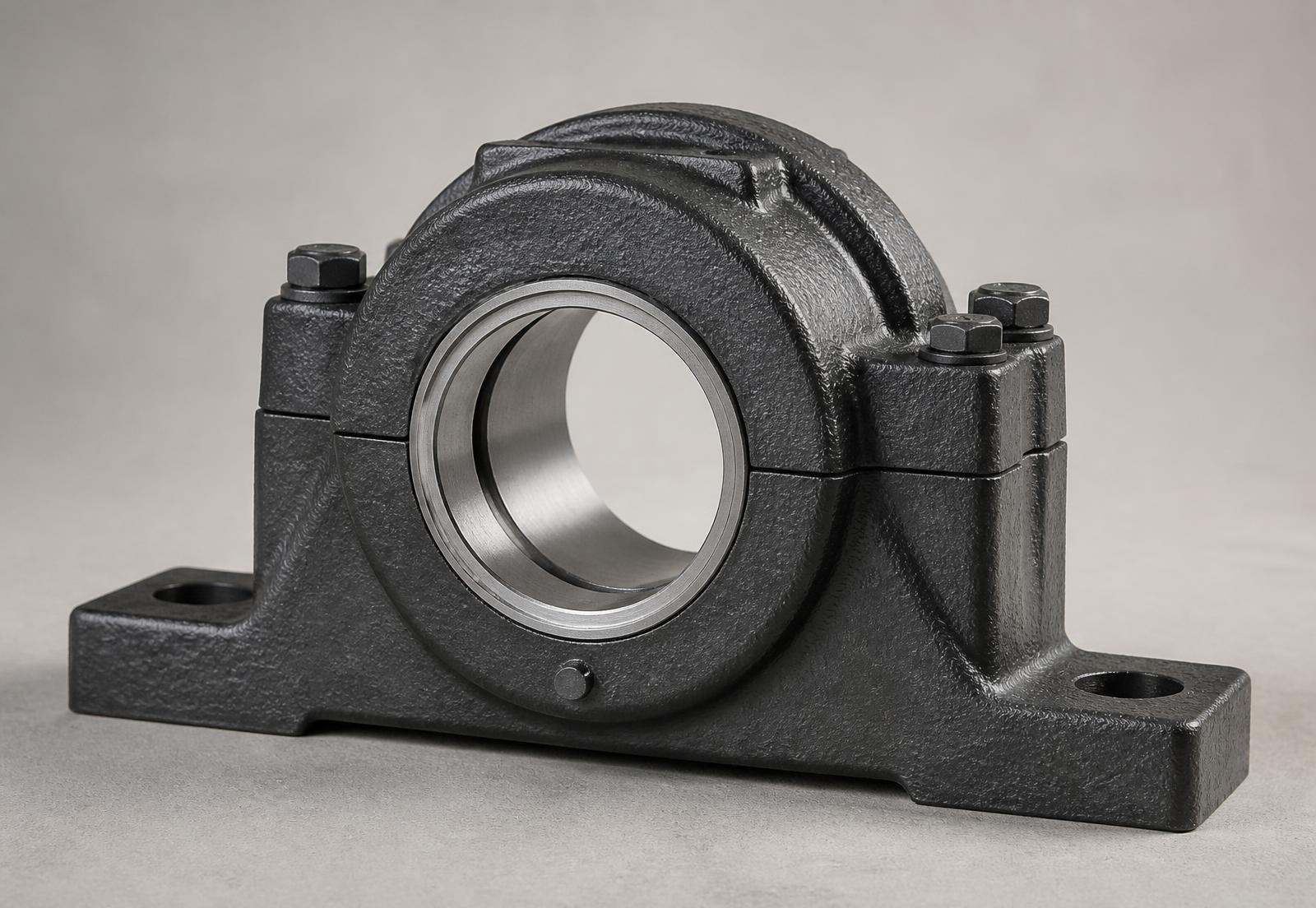
A casting number is a useful starting point, but it may not define the complete bearing arrangement. Record the information visible on the housing and the parts fitted around it before selecting a replacement.
Start with the casting designation
Look for raised or stamped characters on the cap, base and end-cover area. Photograph the complete marking and its location. A partial number can refer to a housing family rather than the exact assembly.
Record the bearing and shaft
The bearing designation and measured shaft diameter help distinguish arrangements that use a cylindrical bore, adapter sleeve or withdrawal sleeve.
- Bearing designation
- Shaft diameter in millimetres
- Sleeve or locknut markings
- Locating-ring details, if present
Check the mounting geometry
Measure the base length and width, bolt-hole centres, shaft centre height and available mounting envelope. Do not rely on one dimension alone when comparing housings.
Identify the sealing arrangement
Note the seal type at each shaft exit and whether the opposite side uses an end cover. Felt, V-ring, lip and labyrinth arrangements are not automatically interchangeable.
For replacement identification, send clear photographs of the complete housing, every marking, the bearing and seal area, plus any available dimensions or drawings.