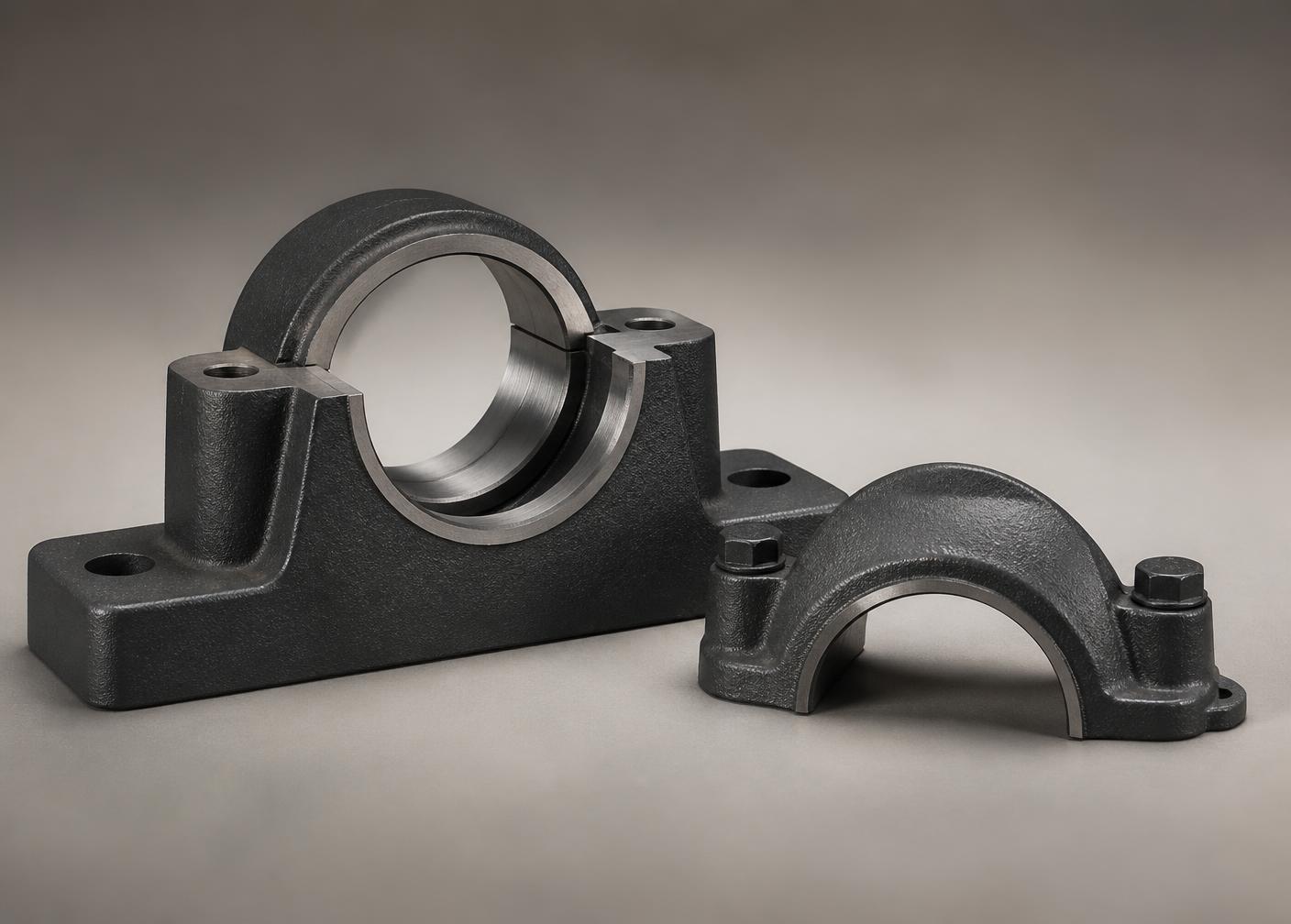
STEP 01
Application review
We check the bearing, shaft, load and mounting details — or your drawing or old housing — before anything is cast.

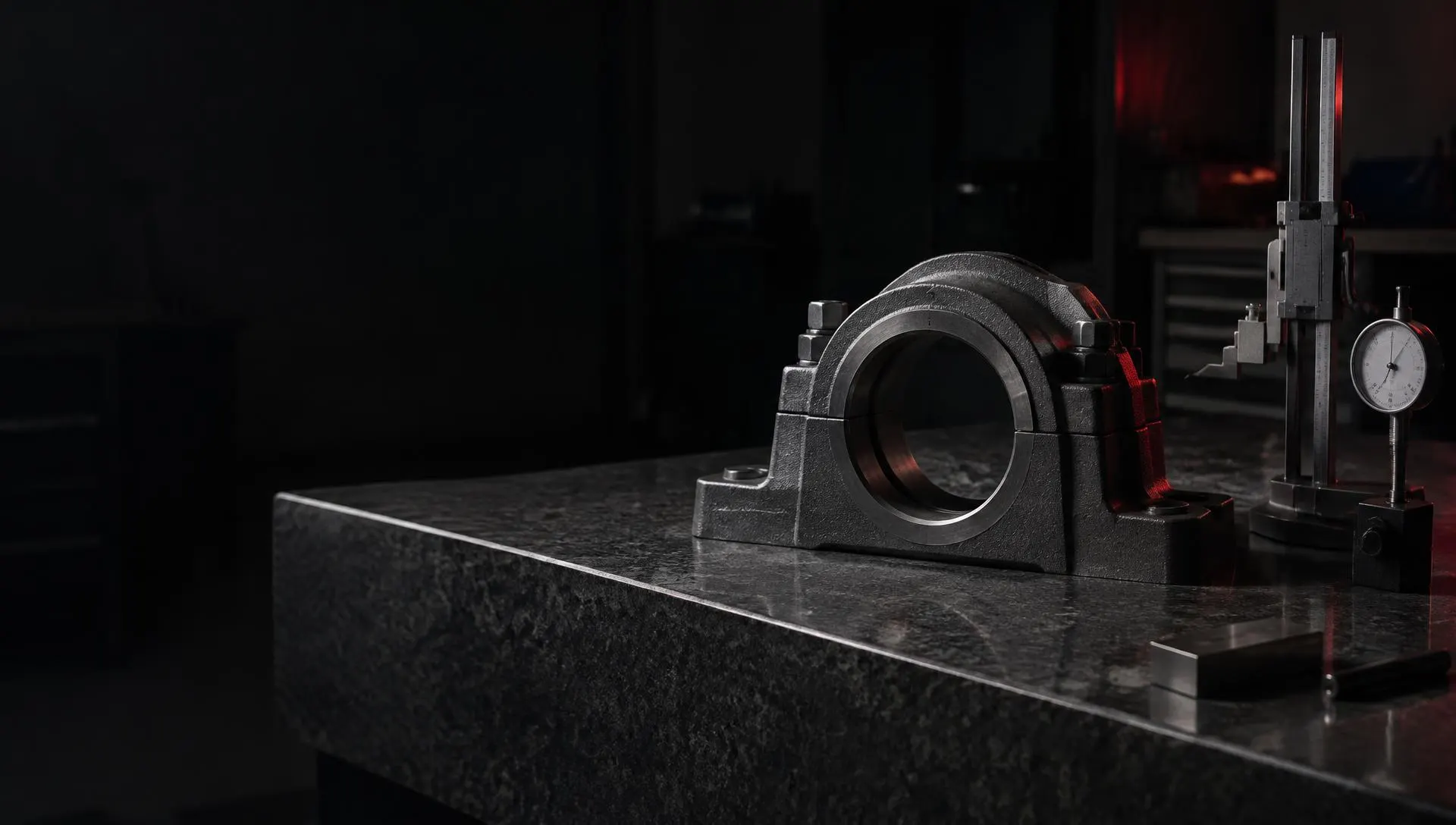
Engineering & Quality
Reliable housing selection begins with the bearing, shaft, load, mounting arrangement and operating environment — not simply the casting designation.
Selection inputs
Share the values you have — anything not yet known can be marked as such and worked out together.
Sets the bore, adapter sleeve and seal size.
Measure the shaft where the bearing sits, in mm. If the bearing is on an adapter sleeve, tell us the shaft size, not the bearing bore.
Defines the seat diameter and width the housing must hold.
Read the number printed on the bearing's outer ring or side face (e.g. 22216 K). A photo of the marking works too.
Decides whether locating rings fix the bearing or let it float.
On a shaft with two housings, usually one holds the bearing fixed and the other lets it slide. Tell us which position this housing is for, or send a sketch of the shaft.
Guides material, wall section and lubrication choice.
Share the shaft speed (RPM), the machine type and any heavy, shock or vibrating loads. Approximate values are fine.
Dust, water and temperature drive the seal selection.
Describe where it runs: indoors or outdoors, dust, water spray, slurry, chemicals, and the rough working temperature.
Grease or oil changes seals, fittings and relubrication points.
Tell us whether you use grease or oil and how often it is topped up, or if you want central lubrication points.
Centre height, bolt pitch and base footprint for replacements.
For a replacement, measure centre height (base to shaft centre), the distance between bolt holes and the base length and width — or send the old housing's drawing or photo.
Process
STEP 01
We check the bearing, shaft, load and mounting details — or your drawing or old housing — before anything is cast.

STEP 02
Patterns are developed for the housing geometry and cast in the specified material.
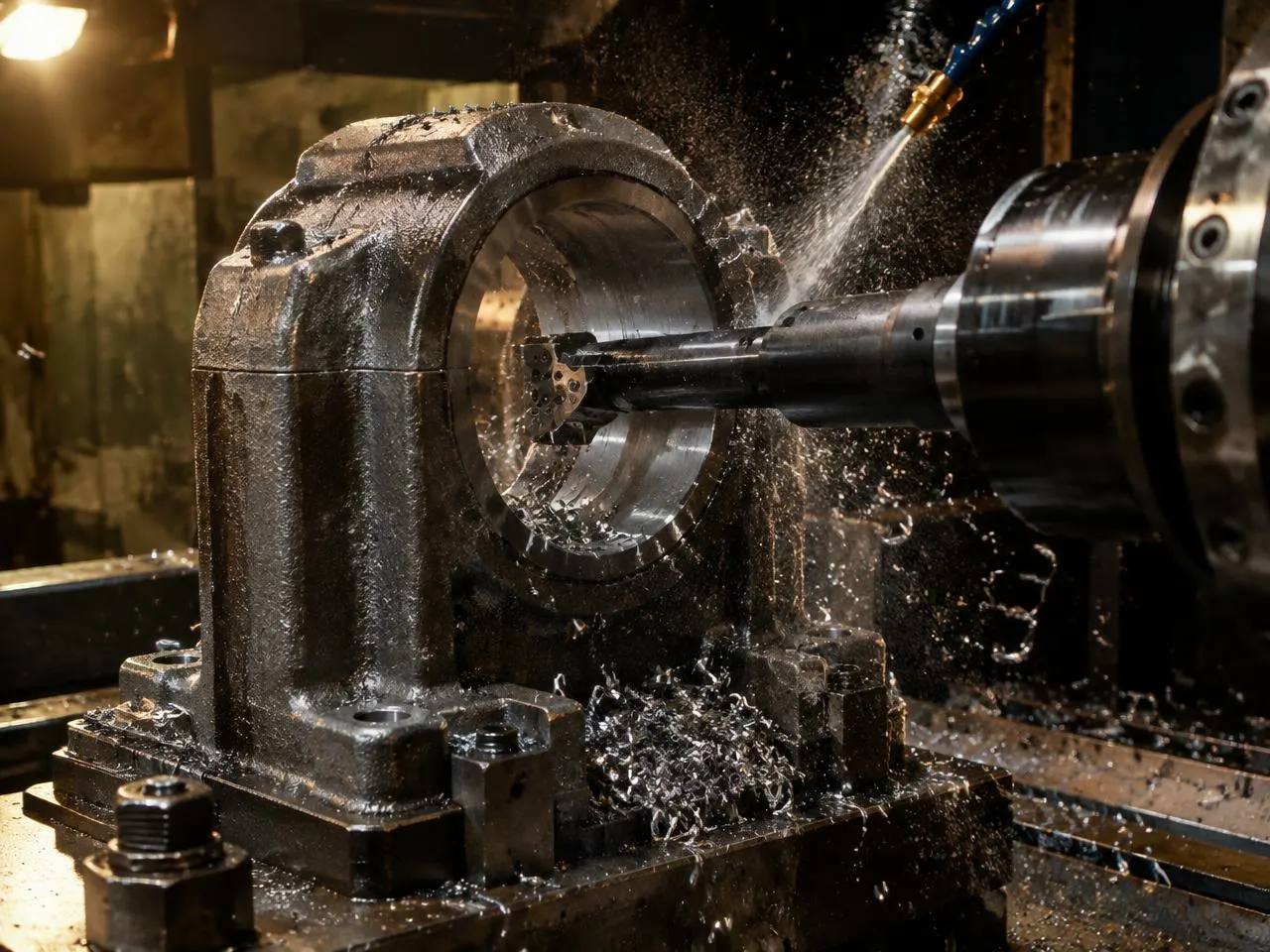
STEP 03
Bearing seat, split faces and base are machined so the cap, base and bearing seat together.
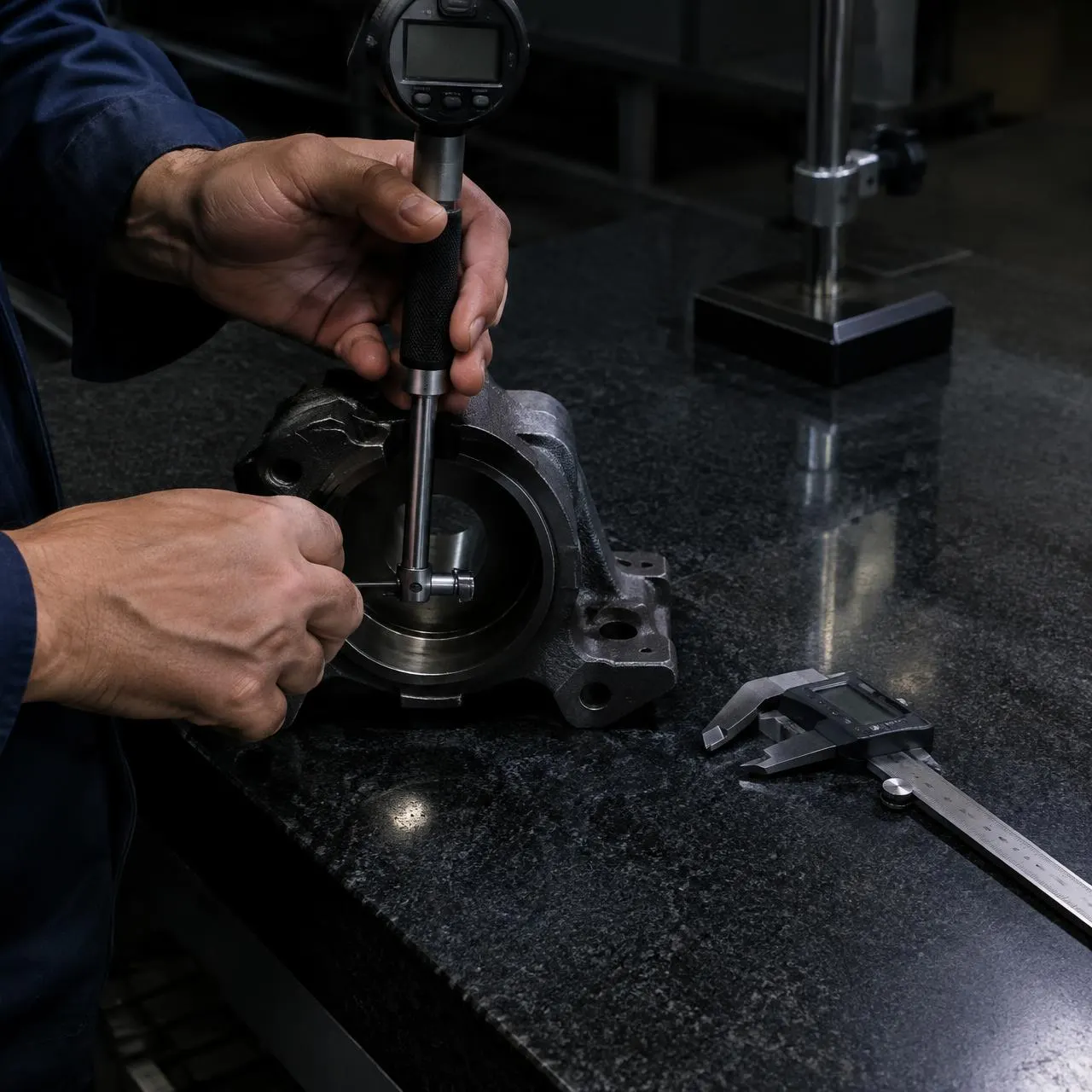
STEP 04
Critical dimensions are verified and documentation and packing prepared as agreed.
— Inside the works —
Every stage that shapes a FRIENDS housing.
Patterns developed for each housing geometry.
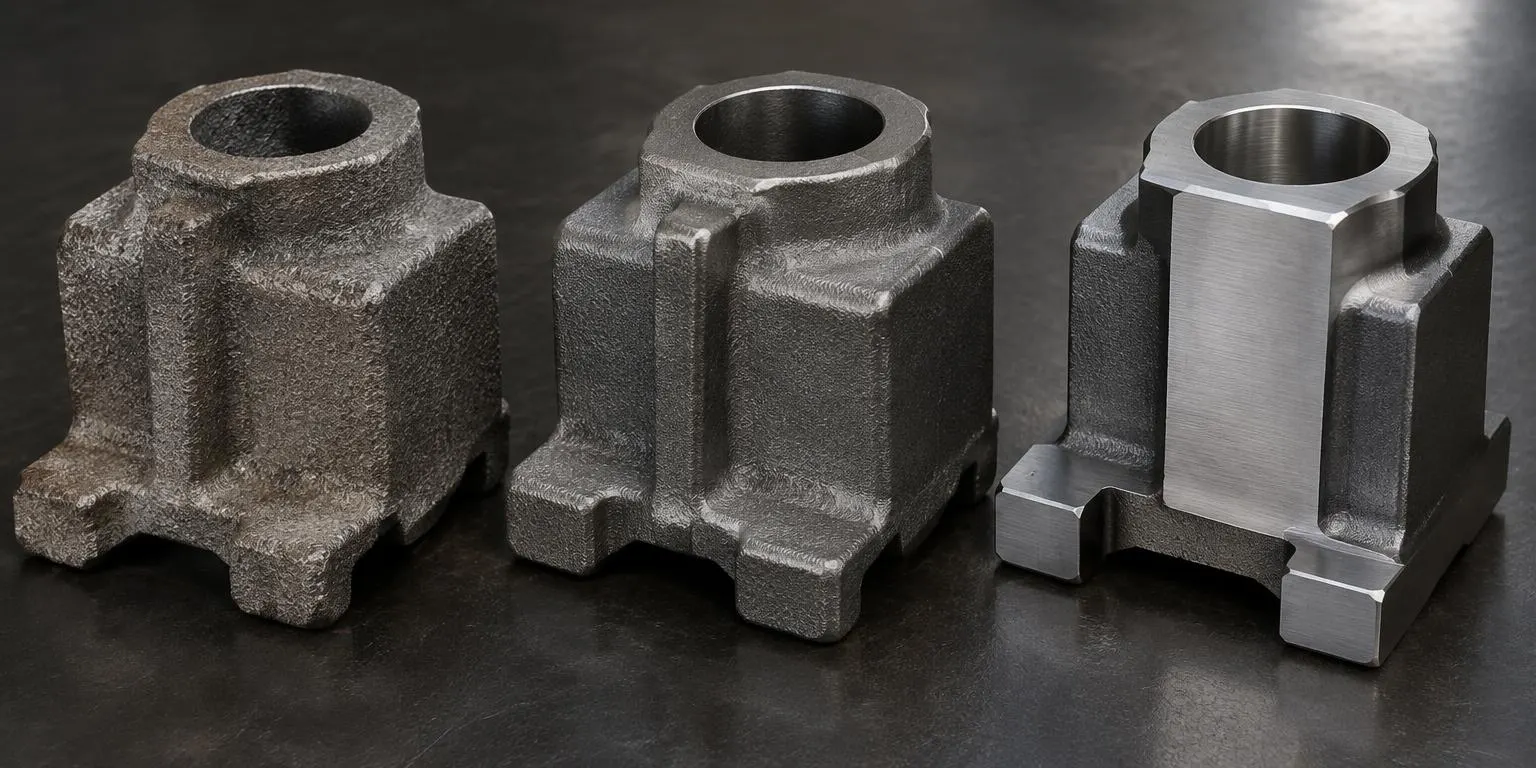
Cast in cast iron, SG iron or cast steel as specified.
Bearing seat, split faces and base machined together.
Critical dimensions verified before release.
Documentation and packing prepared as agreed.
Bearing location
Industrial shafts frequently require one bearing position to locate the shaft axially while another permits thermal expansion. Applicable FRIENDS housings can be configured using suitable locating components.
Locating: locating rings (red) hold the bearing axially.
Floating: the bearing can shift as the shaft expands with heat.
Materials
Established for many standard industrial housings.
RELATIVE TOUGHNESS
Available where greater robustness is required.
RELATIVE TOUGHNESS
For selected severe-duty and special applications.
RELATIVE TOUGHNESS
Quality
Inspection requirements should be defined at quotation stage, particularly for replacement housings, export projects and OEM applications.
ISO 113
ISO 113 defines boundary dimensions for applicable two-bolt and four-bolt plummer-block housing arrangements. Where standard dimensional compatibility is required, specify the existing housing, drawing or dimensional standard in the RFQ.